

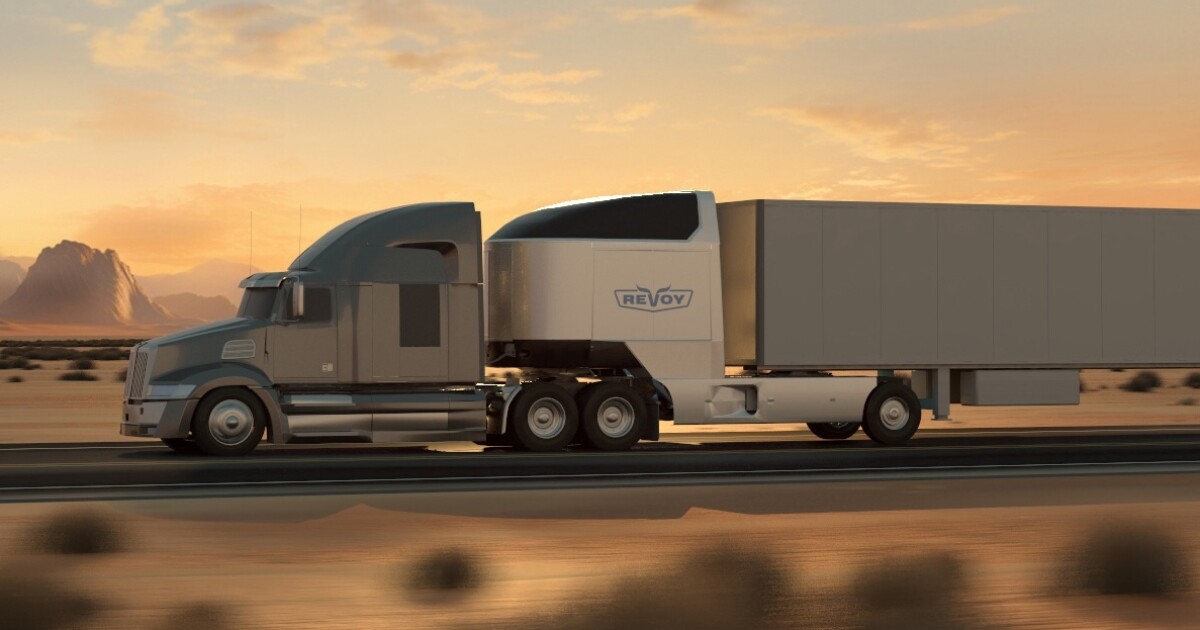
The article left me with more questions than answers but at least it is an attempt.
For one, is a single axel propelling the entire rig at that point?
The article left me with more questions than answers but at least it is an attempt.
For one, is a single axel propelling the entire rig at that point?
Let me introduce you to Australian road-trains
https://www.abc.net.au/news/rural/programs/landline/2025-03-23/kings-of-the-road:-australias-mighty-road-trains/105086406
https://en.wikipedia.org/wiki/Road_train
Tongue in cheek responses aside, by eyeball it’s only a couple of metres longer, that’s really not that big a deal for a decent driver, as long as the second 5th wheel is locked not rotating
Yeah that’s a bit longer I’d say haha. I assume they don’t have to back up 3 trailers though so they? Just set it down pull forward and back individual units up?
They mentioned Australia in the original article, I had just figured it was because a large span of sun lit area that people didn’t want to have to traverse often so it was set routes, but damn
Most everything is designed to be pull-through for obvious reasons, but yes, I’ve seen them being backed up.
I don’t know of any country outside of Oz that uses B Triples (3 trailers), but Canada also uses B doubles (two trailers).
I used to see them in the U.S. more, but it’s rare now. (Doubles) Never triples. Then again a lot of them I’d see were usually on 81, so they could have been heading north/south from shipments in and out of Canada
Interesting, I thought they were illegal in the US - TIL.
I think it’s a state thing, so if your trucking across borders and one state doesn’t allow it, you’re fucked, so most just ship singles.